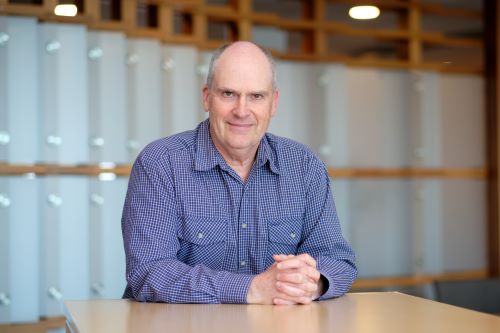
After rebuilding his career and interviewing hundreds of leaders Graeme Cowan learnt that burnout isn’t inevitable. He writes that the managers who stay resilient practice five specific daily habits.
I’ll never forget the morning I froze in front of a client. I was a Vice President at Kearney, the global management consulting firm, presenting our proposal to a three-person client subcommittee. Mid-sentence, my mind went completely blank. Not the normal “lost my train of thought” blank—a scary emptiness where confidence used to live.
I’d been putting on a mask each day, trying to be positive, trying to stay on top of everything. But that morning, I couldn’t do it anymore. I felt anxious and exhausted at the same time—mind racing, body depleted. The mask had finally cracked in the worst possible place.
What I didn’t know then was how common my experience has become. Recent Wiley research reveals that 47% of managers describe their work stress as severe, compared to 37% of employees. The people responsible for preventing team burnout are burning out faster than the teams they’re protecting.
This isn’t just a personal crisis—it’s an organisational one. Gallup research shows managers contribute to 70% of team engagement and wellbeing. When we crash, we don’t fall alone.
But here’s what I learned after rebuilding my career and interviewing hundreds of leaders: burnout isn’t inevitable. The managers who stay resilient practice five specific daily habits.
- Practice self-care (and talk about it)
When managers visibly practice self-care, team performance improves. American Psychological Association research shows a direct correlation. But it’s not just about doing self-care privately—it’s about modelling it openly.
Ellen Derrick, Partner at Deloitte Asia-Pacific, told me she “grew up an athlete” and exercise remains critical to how she works through stress. What transformed her team wasn’t just that she exercised, it was that she stopped hiding it.
When she started naming practices out loud – blocking her calendar for a run, protecting family time – her team followed.
The daily habit: Name one self-care practice out loud today.

Graeme Cowan.
2. Listen with empathy (not just for solutions)
Bob Chapman, CEO of Barry-Wehmiller, discovered you don’t show you care by talking or doing things, you show you care by listening with empathy.
He created a listening course for all 12,000 employees. The core skill? Listen to understand, not to fix. Workplace relationships improved, and managers reported their home lives transformed.
Most people don’t come to you because they need you to solve their problem. They come because they need to feel less alone carrying it.
The daily habit: In your first conversation each morning, listen for 90 seconds without offering advice.
- Play to strengths (even for unglamorous work)
I saw the power of strengths firsthand with my son Adam. In year 12, Adam was interested in advertising. After work experience revealed it wasn’t what he thought, I encouraged him to take Gallup’s CliftonStrengths assessment. He discovered his top strengths were restorative (problem-solving), futuristic (vision), and learner (acquiring knowledge).
These insights helped him choose neuroscience, aligning with his natural abilities. Later, when friends encouraged him to explore medicine, he recognised it would use those same strengths daily. Today, he’s halfway through anaesthetics training and finds great purpose in calm problem-solving, forward thinking, and continuous learning.
Gallup research shows individuals who use their top five strengths each day are six times more likely to be engaged at work.
The daily habit: When delegating any task, ask “Whose strengths does this play to?”
- Recognise progress (not just outcomes)
Teresa Amabile’s research on The Progress Principle reveals nothing motivates knowledge workers more than progress on meaningful work—not recognition, not pay, not perks.
Yet most managers only recognise the finish line. The managers who build momentum recognise the micro-progress: “The way you reframed that problem in this morning’s meeting unlocked something for the whole team.”
The daily habit: Identify one instance of progress, however small, and name it specifically.
- Ask “Are you OK?” (when something doesn’t seem right)
As founding board director of R U OK?, I’ve learned that 95% of people in my leadership seminars know someone close to them, at work or home, struggling with anxiety, depression, or addiction. Everyone is touched by this. Yet most of us stay silent.
I’ve seen this question work in boardrooms, on construction sites, in mining operations—industries where vulnerability feels impossible. It works because the person feels understood.
The critical part: Ask in private. The stigma around mental health remains real.
You don’t need to be a counsellor. You just need to notice when something’s off and care enough to ask.
The daily habit: If you notice a team member seems off, create a private moment and ask: “Are you OK?”
These habits won’t eliminate workplace stress. But they’ll help prevent the crisis I experienced and the one destroying 47% of managers right now.
Start with one habit tomorrow. Your team is watching.
Graeme Cowan is a leadership speaker, founding board director of R U OK?, and host of The Caring CEO podcast. His new book GREAT LEADERS CARE: Building Safe, Resilient and Successful Teams (Wiley) addresses the leadership crisis where managers are expected to prevent team burnout while managing severe stress themselves.