New Zealand employers are facing a new set of demands from a workforce that values job security and trust far above workplace perks or career ladder gains amid ongoing job market uncertainty.
Randstad’s 2026 Employer Brand Research finds that a tough economic year has triggered a behavioural reset with three in five (60%) Kiwi workers prioritising reliable pay and benefits as the leading driver of job security in New Zealand.
This was followed by transparent and trustworthy communication (48%) and fair and consistent employment practices (44%). Meanwhile, strong company culture captured only 32% of worker interest, signalling that operational fairness and transparency matter far more to most workers now.
Randstad says in a statement that the shift comes as employment conditions begin to stabilise after a tough year. SEEK data suggests an uneven recovery, with job ads edging up 0.3% in May 2026 (a 12% increase year-on-year), while unemployment remains at 5.3%. It says these mixed signals mean caution remains the baseline, with both sides of the hiring equation calculating their decisions with care.
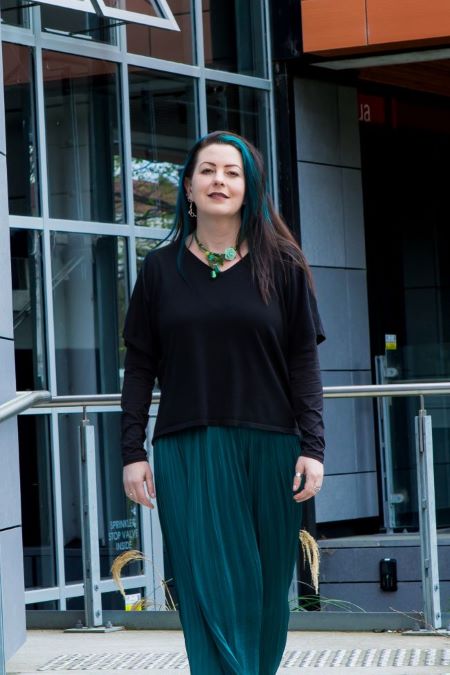
Brooke Nelson, general manager of professionals at Randstad New Zealand says this isn’t a lack of drive from workers, but a recalibration of risk.
“After a challenging economic cycle, the traditional playbook of moving jobs simply to chase a higher title or a bigger paycheque has taken a backseat. We have potentially entered an ‘ambition freeze’ where stability is the priority. Workers are essentially saying, ‘I will stay put, but my terms of engagement are changing.’ They are looking for clear proof of good leadership, transparent communication, and fair practices,” she says.
Perks out, stability in
Randstad says the hype era of recruitment is officially over – employees are demanding a return to realism.
The report findings “…point to a definitive reset in worker priorities, revealing that candidates are no longer swayed by flashy perks or performative corporate branding. Instead, the focus has shifted past the superficial, and true retention now hinges on predictability.”
It says today’s talent is evaluating companies on the core fundamentals of reliability, transparency and fairness:
- Reliable pay and benefits (60%)
- Transparency and trustworthy communication (48%)
- Fair and consistent employee practices (44%)
Sarah Bills, country director at Randstad New Zealand says New Zealand is “experiencing a shift from a ‘perks economy’ to a ‘predictability economy’. For years, companies competed on unique culture and perks, but today’s top talent is looking deeper. Well-intentioned promises don’t pay the bills or prevent burnout”.
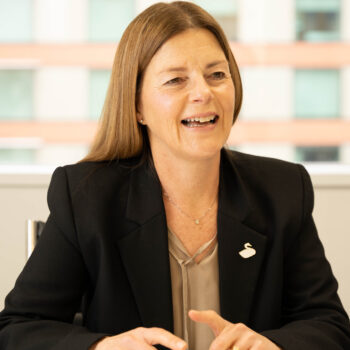
Sarah Bills, country director Randstad New Zealand.
Nelson adds that employees want to know that the ground beneath their feet is solid.
“Offering job security and organisational stability is no longer a passive retention strategy; it’s becoming the definitive baseline for attracting and keeping talent. What matters in today’s climate is consistency over clout.”
Randstad says this cautious environment is also reflected in subdued job mobility across New Zealand. While 23% of Kiwi workers intend to change jobs, only 14% have made a move, which highlights a major gap between intent and action as workers choose what they know over market uncertainty.

Brooke Nelson, Randstad New Zealand.
Workers redefine ‘balance’
The definition of work-life balance in New Zealand has also undergone a reset. A supportive work environment is seen as the most important element of achieving work-life balance at 51%, followed closely by a demand for reasonable workloads, clear expectations, and flexible arrangements. Randstad’s research suggests a clear trend: talent wants more say in their daily well-being.
The company says that while flexibility matters most to Millennials (39%) and Gen X (41%), the demand for a stable, positive environment skyrockets to 71% for Baby Boomers.
“Additionally, a moderate but consistent gender split reveals that more women than men are leading the charge for daily manageability, placing a higher priority on realistic workloads and expectations.”
Nelson says work-life balance “is no longer one-size-fits-all; it’s a strategic lever for long-term retention. Jobseekers are asking a very practical question: Does this role work for my life right now, and will it keep me secure a year from now? You can’t solve that equation with office perks like ping pong tables in the break room or superficial culture. True work-life balance isn’t about escaping the job through perks; it’s about how that job is structured, managed, and supported”.
Applicants who feel authentic and individual
Randstad says the same focus on trust is reshaping how employers assess candidates.
“With larger talent pools and more standardised applications, including the growing use of AI tools, hiring managers are placing more importance on looking for applicants who feel authentic and individual.”
Bills says the company is seeing a lot of applications that technically tick all the boxes “but many feel similar in style and approach. Employers are not looking for cookie-cutter, word-perfect CVs and cover letters; they are looking for authenticity. They want a clearer sense of how the candidate thinks, communicates and presents their personal, relevant experience in a way that feels genuine and individual.”
Seeking people, not portals
The company says that while happy to use AI to fine-tune their own CVs, candidates are far less comfortable when prospective employers rely on the technology.
Rather than quietly adapting to automated systems, candidates are actively grading employers on their level of human connection, and Randstad’s research findings suggest a clear mandate from talent:
- 69% of talent value human interaction when exploring potential roles
- 73% value human connection during the application process
It says these findings show that while AI adoption is increasing, it hasn’t erased the need for human connection; it has amplified it.
“We’ve reached a tipping point where technology can handle more of the process, but it cannot manage and grow relationships,” says Nelson.
“When the market feels uncertain or overly automated, people naturally seek out human judgment and fairness. AI might speed up the hiring loop, but technology cannot build trust. Workers are sending a clear message to employers: Don’t let software replace standard human decency.”
Now in its 17th year, the 2026 Randstad Employer Brand Research explores New Zealand workers’ perceptions of employer brands. Randstad says it is the largest independent employer brand research in the world, providing insights from nearly 171,000 respondents and 6,400 organisations in 34 countries worldwide, including 3,501 New Zealanders.
Photo by Timon Studler on Unsplash