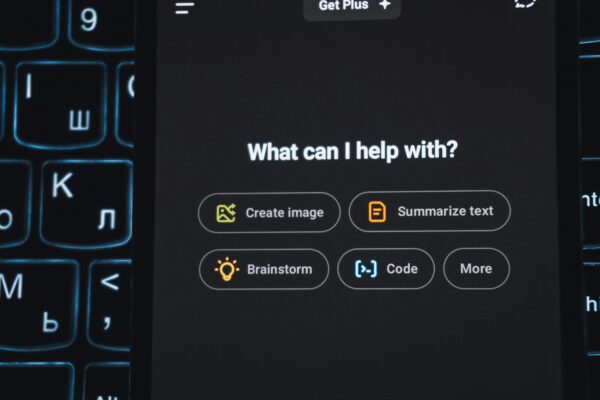
As artificial intelligence enters the boardroom who’s really leading, ask Russell Craig and Joel Amernic.
When a CEO steps up to the podium at an Annual General Meeting the stakes are high. The speech the CEO is to deliver is not just ceremonial but a strategic act of leadership that must persuade, reassure, and inspire.
However, if speeches by CEOs are drafted by artificial intelligence programmes, this raises a fundamental question: Who is truly exercising corporate leadership?
CEOs should be wary of being perceived as delegating leadership to a machine.
The rise of the machine ghostwriter
Ghostwriting for CEOs is nothing new. Jack Welch, the legendary General Electric boss, had a widely known close working relationship with his ghostwriter Bill Lane for two decades. Warren Buffett of Berkshire Hathaway has publicly acknowledged the strong role others have played in crafting his annual letter to shareholders.
AI platforms like ChatGPT and Copilot are changing the game. Their use by CEOs promises speed, consistency, and cost-efficiency but risks sounding hollow.
To be effective, an AI-generated speech must impersonate a CEO’s voice, style, and strategic intent and must accommodate audience expectations, corporate context, and cultural nuances. That’s no small feat.
The case for
Some have viewed speechwriting by AI as simply the next step in the evolution of support mechanisms for executives. Politicians and business leaders have long relied on human ghostwriters. Why not extend that third party reliance to machine-based ghostwriting?
There are many benefits. AI platforms can analyse vast datasets in seconds, tailor messages to diverse audiences, and maintain a consistent tone across communications. They can deliver grammatically polished drafts with impressive linguistic range. Some can even adapt to audience feedback as speeches are being presented.
AI offers a pragmatic and appealing way ahead for time-poor CEOs who are juggling complex responsibilities and commitments. But there are some catches.
Speeches written by AI can be impersonal, overly polished, and oddly hollow…
The case against
AI struggles with emotional nuance, cultural references, humour, and the human touch. Speeches written by AI can be impersonal, overly polished, and oddly hollow.
When CEOs outsource speechwriting to AI without meaningful engagement themselves, they forfeit the opportunity to benefit from “writing to learn.” Crafting a speech is not just about the message. Rather, it’s about learning from the writing process and by benefitting from the reflection and synthesis involved. Such learning often helps to enhance strategic clarity.
There are legal risks too. Shareholders may sue if they act on misleading information provided in an AI-generated speech. Regulators may allege some disclosures are inaccurate. Boards may hold CEOs liable for delegating core leadership functions to a machine.
Leadership at risk
AI is neither a friend nor an enemy to the CEO, but rather a “frenemy.”
Effective leadership demands the CEO’s presence, not just at the podium, but in the process of shaping messages beforehand. A speech written entirely or substantively by AI risks becoming a performative act, detached from the leader’s thinking.
Ghostwriting, whether by human or machine, severs the link between authorship and delivery. In the age of AI, that rupture becomes potentially more deceptive.
CEOs, as human leaders, should refine and personalise the final message in any AI-generated speech, and publicly own the end product. If AI is to play a role in leadership communication, transparency is essential. CEOs must acknowledge their use of AI, engage with its outputs, and ensure the final speech they deliver reflects their strategic and ethical intent.
CEOs should not reject AI outright. Used wisely, AI can be a valuable tool to generate discussion and stimulate ideas. Although AI may assist in completing many leadership tasks, it must not replace the human voice at the heart of a company. CEOs must remain authors of their own leadership and not just the performers of a machine’s script.
Russell Craig is an Adjunct Professor in the Business School at the University of Canterbury, New Zealand. Joel Amernic is a Professor in the Rotman School of Management at the University of Toronto, Canada. They are the joint authors of Decoding CEO-speak (University of Toronto Press) and CEO-Speak: The Language of Corporate Leadership(McGill-Queen’s University Press). Their research explores how corporate leaders use language to shape strategy, influence perception, and navigate ethical and governance challenges. This article draws on the authors’ paper “Disembodying CEO Leadership Through AI-assisted Speechwriting” published in Possibility Studies and Society.
Main image: Photo by Zulfugar Karimov on Unsplash