Bookcase : Leading for Millennials
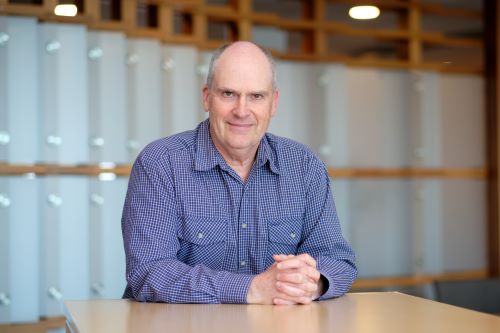
The Truth about Leadership By James M. Kouzes & Barry Z. Posner Publisher: Jossey Bass • $24.95 The context of leadership changes; the content hardly changes at all. James Kouzes
The Truth about Leadership By James M. Kouzes & Barry Z. Posner Publisher: Jossey Bass • $24.95 The context of leadership changes; the content hardly changes at all. James Kouzes
The Truth about Leadership •By James M. Kouzes & Barry Z. Posner •Publisher: Jossey Bass • $24.95 The context of leadership changes; the content hardly changes at all. James Kouzes
New research suggests a little bit of UV is good for us – but it’s no cause to be sloppy in our approach to the sun.
Sponsored by The University of Auckland Business School Short Courses www.shortcourses.ac.nz 0800 800 875 December 6-7 Business Skills for New Managers. Auckland. University of Auckland Short Courses. www.shortcourses.ac.nz 8-9 Strategic
Kea Auckland launch: Kea Auckland’s launch party at Shed 5, Wellesley St, November 11. The launch of Kea Auckland attracted capacity crowd of 500 at Shed 5 on Wellesley St.
Global Kiwi network Kea has launched its first branch on domestic soil in Auckland. Around 500 Kea supporters and members gathered to wet the fledgling’s head and listen to addresses
We need to focus more on mid-level leaders, new study by Development Dimensions International (DDI) has shown. In today’s world, middle managers are more like general managers of the past.
We’ve reached another year end battling, adapting to, or in some cases riding high on the winds of change in the aftermath of the Global Financial Crisis. Those organisations and
Every country in the world should be putting a value on its ecosystems, says the World Bank. Janet Ranganathan answers questions about this new global initiative and how it will affect economic development.
A new leadership programme to help New Zealand firms lift their management skills so they can succeed internationally has been launched by NZ Trade and Enterprise. The Government has provided a modest $1.3 million funding allocation for an initial pilot programme targeted at senior executives, owners and directors of New Zealand firms doing business overseas.
A new leadership programme to help New Zealand firms lift their management skills so they can succeed internationally has been launched by NZ Trade and Enterprise. The Government has provided a modest $1.3 million funding allocation for an initial pilot programme targeted at senior executives, owners and directors of New Zealand firms doing business overseas. It aims to accelerate the learning process for the internationalisation of these firms and improve their prospects of global success.
The biggest issue facing the New Zealand economy… where to from here for the coal industry?… teaching managers to be better exporters… six ways leaders can fuel excellence… management information on a network of your choice… a conversation with Fletcher Building CEO Jonathan Ling on what he looks for in his executives.
The growth of the internet and social media has altered the way many managers communicate with each other. The immediacy and responsiveness of online tools is making it easier for people to network, share and discuss ideas and events in real time. Many professionals now use a handful of different online tools to manage their day-to-day work.
The terrible tragedy that has unfolded over the past week at the Pike River Coal mine has reinforced once again just how risky a business underground mining is. It could also hasten the momentum that is currently gathering to develop alternative ways of extracting energy from mother earth, as energy writer Peter Hamling outlines.
Finance Minister Bill English should not have been puzzled by the Standard & Poor’s decision this week to affirm New Zealand’s AA+ rating for foreign currency debt but to place it on negative outlook, according to Bob Edlin, Executive Update’s economic commentator.
Excellence requires enormous effort. You need to give your people a compelling reason to push beyond their comfort zones. So what, then, can leaders do to most effectively inspire and nurture excellence in those they lead? Here are the six keys, according to regular Harvard Business Review contributor Tony Schwartz, president and CEO of The Energy Project and the author of The Way We’re Working Isn’t Working:
When it comes to surrounding himself with the best people, Jonathan Ling, managing director of Fletcher Building, focuses on three key things. “They need to be money makers, big people skills are essential and they must fit culturally.”
Guests at this year’s Deloitte/Management magazine Top 200 awards will be treated to a dinner menu from the restaurant of New Zealand’s top international celebrity chef, Peter Gordon. The awards at Auckland’s SkyCity on 2 December will include a menu designed by dine by Peter Gordon, the famous chef’s award-winning restaurant in the SkyCity Grand Hotel.
Pay rates dropped in 2010 for a quarter of 215 job types surveyed in the just released Employers National Wage and Salary Survey. Unskilled jobs have been most affected by the tough economic conditions says David Lowe, employment services manager for the Employers and Manufacturers Association which undertakes the survey. Unskilled job positions averaged a 0.1 percent pay decline, semi-skilled pay rates improved a little and rates for skilled and management pay increased the most by an average of 1.7 percent.
The Department of Labour’s latest Leading Indicator of Employment (LIoE) is forecasting some encouraging, albeit relatively modest, employment growth over the coming quarters. The indicator is forecasting employment will grow between 0.5 percent and one percent per quarter over the next three quarters.
“I think the business community just has to get more engaged in helping educate the public,” says Jim Owens, one of the USA’s most influential business leaders, whose 38-year tenure with Caterpillar, most recently as chairman and before that CEO, ended last month. He reflects on an unconventional career path, organisational change and how and where to stay competitive over the long term.
Over half of all Kiwi employees use social media to promote their personal brand but “old fashioned” verbal communication remains the most important attribute for getting ahead in the workplace, according to the latest national survey from workforce solutions company Kelly Services. The findings are part of the Kelly Global Workforce Index, which obtained the views of approximately 134,000 people in 29 countries, including almost 5000 in New Zealand.
Want to catch up with why motivation doesn’t have a lot to do with money or why our current obsession with social media runs the risk of turning us into a bunch of shallow thinking morons? A growing resource of enlightening and entertaining video clips – in which an illustrator draws images as a well-known speaker presents a topic – can be viewed at www.thersa.org. Like the Waiheke Island subscriber who introduced us to this fascinating website, you can go into a draw for a Flip MinoHD (RRP $379.95) pocket video camera for sharing informative and interesting blogs, websites or online video clips with other readers of Executive Update<
UK non-profit organisation Carbon Disclosure Project began in 2000 with a simple idea: ask the world’s largest companies to publicly share information about their carbon emissions and the actions they’re taking to manage them. Ten years later an astonishing 82% of the 500 largest companies in the world, now answer the CDP’s questions.
This week’s gathering in Auckland of dairy industry leaders from around the globe for the International Dairy Federation 2010 conference emphasises once again the huge power and influence the industry has on the New Zealand economy. “It is difficult to overstate how important the success of the agriculture sector, and the dairy industry in particular, is to the future of the New Zealand economy,” says Brendon O’Donovan, Westpac’s chief economist.
When interest rates soared on Irish government bonds, it served as a grim warning to other indebted nations of how difficult and even politically ruinous it can be to roll back decades of public sector largesse, the New York Times reports. It says a recent run-up in interest rates highlights a real concern throughout Europe: that the first round of spending cuts and economic changes put forward by countries that also include France and Britain may not be enough to bring deficits down to the target levels of three percent of gross domestic product by 2014.
Considering the recent turbulence of financial markets and the real economy, true value creation is now the most important job for every executive. Yet corporate finance often remains the hunting ground of CFOs and technicians. Since all executives – and CEOs in particular – should understand the basics of value creation for strategy, McKinsey & Co has boiled them down to a few essential principles that are both understandable and actionable.
If you and you and your organisation have dismissed Facebook, Twitter, and blogs as passing fads, think again say a bevy of communication experts. Embracing and effectively harnessing the power of social media will be crucial to understanding and succeeding in the brave new business world of the future, they argue. NZ Management has a five-step guide for managers on how to set up and use social media.
Business conditions are gradually improving, the Reserve Bank encouragingly says in its latest Financial Stability Report released this week. But size is a consideration: a more sombre tone is struck in the outlook for small- to medium-sized enterprises says Executive Update economic commentator Bob Edlin.
There was more good news for exporters this week with the ANZ Commodity Price Index which tracks the performance of many of our major exports showing a 3.5 percent rise in October and soaring to a new record high. Leading the charge was wool with its world price surging 29 percent to a 21-year high.
Companies around the world spend up to $100 billion a year to “train” employees in the skills they need to improve performance but training typically doesn’t have much impact. Only one-quarter of the respondents to a recent McKinsey survey said their training programmes measurably improved business performance, and most companies don’t even bother to track the returns they get on their investments in training.
The second 2025 taskforce report on “closing the gap” with Australia released this week looks like it will join the report in the Government’s wastepaper bin. Perhaps of more significance was the appointment of Murray Sherwin, MAF’s retiring director-general, as the head of the new Productivity Commission, as economic commentator Bob Edlin reports.
A shopping-by-mobile-phone trial being conducted in a Spanish town highlights the increasing ubiquity and range of mobile technology. A group of residents with slightly modified phones and retailers with adapted sales terminals are testing what could end up being common practice – chucking credit cards in favour of mobile phone payment for everything from a loaf of bread to a haircut.
“We continually have the wrong discussions in New Zealand on almost every issue of major national importance,” says Don Elder chief executive of Solid Energy. “No sooner is an idea advanced for discussion, than one group or another hijacks the issue and redefines it in a grossly, over-simplistic way.”
Classic “tough times” management has helped New Zealand’s largest companies weather another challenging year in reasonably good shape. A number of outstanding performers from amongst them have been recognised in this year’s Deloitte/Management magazine Top 200 finalists list.
In New Zealand’s first major peer review of reputation, NZ Management magazine and global business consultancy Hay Group reveal our Most Reputable Organisations. Reg Birchfield analyses the insights that emerged.
Notching up a phenomenal revenue growth rate of nearly 1900% over the past three years earned niche finance provider Telecom Rentals top placing on this year’s Deloitte’s Fast 50 – ahead of web-based retailer Nature Shop (1106%), lighting technology company Energy Light (1081%) and mobile software company Mobilis (1078%). Showing little evidence of being dampened by a flat economy, this year’s Fast 50 have collectively delivered more than 800 jobs and grown the Kiwi economy by $761 million over the past three years.
Global employment may not now recover until 2015 – two years later than originally predicted – according to the just-released ‘World of Work’ report issued by the International Labour Organisation.
Managing a colleague with 10 or 15 more years of experience than you can present unusual challenges of motivation, boundary-setting, and leadership. Here are some tips to get the most out of senior managers.
As expected, the Reserve Bank left the Official Cash Rate unchanged yesterday. But as economic correspondent Bob Edlin reports it has done nothing to appease exporter concerns about the NZD’s continuing climb against the USD. This is also the real reason behind Warner Bros uneasiness about producing the Hobbit movies here, according to one commentator.
Entrepreneur and 42 Below founder Geoff Ross says there are two distinct business cultures in New Zealand – accelerated and “ball & chain”. “You can sense which culture businesses fit into – with the accelerators, you can feel the sense of urgency and energy as you walk in the door.”
Every second Sunday evening, high flying global managing director Helen Robinson catches a late night plane from Auckland to either London or New York. She returns the following Friday, works for a week from her Auckland home base and then repeats the exercise. Her exposure to the international business world means she has some strong views on what New Zealand needs to do succeed in this environment.
Thousands of investors in failed finance company South Canterbury Finance have just got their money back under the Government’s retail deposit guarantee scheme. But retailers aren’t counting on seeing much of the taxpayer bailout of just over $1.5 billion as Executive Update’s economic commentator Bob Edlin reports.
Despite increasingly widespread belief that there is a direct connection between a company’s gender diversity and its business success, this is still not reflected in top management makeup – because it’s just not seen as a priority.
• William M Klepper • Columbia Business School Publishing • RRP: $54.95 The dynamic between company directors and the CEO is crucial part of an organisation’s success, as they share
• Bruce Russell • Wired Internet Group • Free on request Either this is very clever marketing ploy or it’s the best free book I’ve ever read. Starting car is
Optimism in the hiring market has slipped a little with fewer New Zealand employers planning to increase staff numbers and a slight increase in those contemplating a reduced headcount, according to the Hudson Report: Employment Expectations for October to December.
Five capabilities are at the heart of centred leadership, according to McKinsey & Company research: finding meaning in work; converting emotions such as fear or stress into opportunity; leveraging connections and community; acting in the face of risk; and sustaining the energy that is the life force of change.
Frustrated watching great ideas get shot down and never see the light of day? Wondering why change is so hard to achieve, even with a well laid-out plan? Then join best-selling author and Harvard Professor John Kotter, one of the world’s foremost experts on organisational change, in an interactive – and complimentary – webinar next week.
At a time when the tele-communications market in New Zealand is a battleground, Kelvin Hussey, the general manager of CallPlus, talks about his perspective on the business.
Many board members do not see their role as challenging the value of capital investment proposals. Yet systemised capex appraisal is vital to creating shareholder wealth, argues specialist consultant in the field Tony Street.
THE TOP 200 CAMPAIGN This year’s Deloitte/Management Top 200 Companies campaign,‘Understanding the New World’, examines six major contemporary issues and opportunities for business. This month, how New Zealand can be
So – did an accident of geography make Kiwis inventive, innovative problem-solvers, able to take piece of number eight wire and turn it into high-tech electric fence? Or are we
Business, staff and families all benefit from workplace diversity initiatives, says EEO Trust CEO Philippa Reed. Brenda Ward spoke to her about New Zealand’s top workplace performers.
Internal communications is the lynchpin of your business’ employee engagement strategy.
November 7-12 Company Directors’ Course. Auckland. Institute of Directors. www.conferenz.co.nz 8-9 Probem Solving and Decision Making. NZIM Central. www.shortcourses.ac.nz 8-9 Project Management. Auckland. University of Auckland Short Courses. www.davidforman.co.nz 9
‘Prevention is better than cure’ is one of the oldest, yet most important, sayings in the health book.
Bruce Irvine New Zealand’s new ‘heartland bank’ has appointed Irvine as chairman of the board of directors. Building Society Holdings (BSHL) is the new entity which will be the listed
As trading conditions remain unstable, more companies are turning to car leases – and they’re buying smaller cars.
New Zealand companies need to look at the United Arab Emirates as an export destination.
The Agri-Women’s Development Trust’s Escalator programme was launched at Parliament on September 16: 1 From left, Agri-Women’s Development Trust members Sue Yerex, Mavis Mullins (Patron), Lindy Nelson (Chair) and Jane
John Brakenridge, of The New Zealand Merino Company, was named the outstanding leader at the New Zealand International Business Awards in Auckland on October 13. The chief executive of The
Using public private partnerships (PPPs) to fund local government infrastructure projects faster is supported by 58.6% of senior business decision makers. Some 47.8% of the public also support this financing
The economic downturn has created growing sustainability divide, separating New Zealand businesses which “get” sustainability from those which see it as “nice to do”, says University of Waikato Management School’s
This year, all the Christmas and New Year public holidays fall on weekend days, which creates extra problems for payroll offices across the nation. Jo Smith of the TimeFiler online
Managers need to be aware of two changes to employment law that may affect their workplaces. The Employment Relations (Rest Breaks and Meal Breaks) Amendment Bill relaxes the provisions on
Douglas Hudson, CEO of Fullers Ferries, Auckland. There are lots of oldies on my list, but some new ones too. I’m actually more likely to listen to music in my
Open source software is now firmly embedded in the business world, says Clare Coulson of the New Zealand Open Source Society, and she says results for this year’s awards prove
There’s worrying lack of urgency in the aftermath of the Christchurch earthquake that means bureaucracy is slowing down the city’s commercial recovery, warns Chartis Insurance’s new CEO Cris Knell. Knell
New Zealand businesses are struggling to find and nurture effective future leaders, despite increasingly investing in leadership development, says new study. The IBM Working Beyond Borders Study of senior human
The new Super City gives us a chance to fix congestion sustainably.
A shopping-by-mobile-phone trial being conducted in a Spanish town highlights the increasing ubiquity and range of mobile technology. A group of residents with slightly modified phones and retailers with adapted sales terminals are testing what could end up being common practice – chucking credit cards in favour of mobile phone payment for everything from a loaf of bread to a haircut.
Organisational leadership and reputation – one plays a critical role in building the other. Reg Birchfield argues the case for effective leadership programmes.
The upsides of ageing – ‘from warrior to wisdom’ – can give older boards distinct advantages, Iain McCormick suggests.
Calling all budding innovators and thinkers… New Zealand needs you now.
World firsts in innovation are an everyday event at Fonterra’s Palmerston North research centre.
Many board members do not see their role as challenging the value of capital investment proposals. Yet systemised capex appraisal is vital to creating shareholder wealth, argues specialist consultant in the field Tony Street.
The upsides of ageing – ‘from warrior to wisdom’ – can give older boards distinct advantages, Iain McCormick suggests.
What do employers want to change about their workplaces? That’s what hundreds were asked over two years by the Human Rights Commission. Dr Judy McGregor headed the project.
Could Kiwis’ No 8 wire mindset be the very thing that is holding us back from being a world-class centre of innovation and thinking? What does New Zealand need to do to become a global leader in the innovation stakes.
Social media may start as an in-house social chat room, but it can turn into an amazing corporate tool, says Louise Denver.
Overcoming some of the toughest times for the economy, Sharon McCook was able to build partnerships for the Health Research Council of New Zealand that leveraged $3 for every $1
In contrast to most other indicators released recently, the results of the BNZ Confidence Survey undertaken this week show an improvement in business sentiment. A net 18% expect the economy to get better over the coming year, a turnaround from a net 1% expecting a deterioration two months ago. However, BNZ chief economist Tony Alexander concedes this rebound in sentiment is not all that apparent from comments about respondents’ own particular sectors, which the BNZ has summarised.
Despite a great deal of energy spent on trying to balance the gender make up of senior management teams – including countless well-intentioned mentoring programmes for high-potential professional women – men still receive more promotions than women. How can women overcome these odds?
Actively pricing products or services across their life cycle is increasingly important, particularly in innovation-intensive industries such as consumer electronics and consumer durables, IT, medical devices and pharmaceuticals. Failing to do so may forego potential profits or even destroy value.
Yesterday’s weaker-than-expected retail sales statistics is a positive development for a government wanting to encourage exports and discourage domestic consumption in its attempts to rebalance the economy, says economic commentator Bob Edlin. But it was a negative number in the forex markets and an immediate reflex action saw the dollar ease as analysts anticipated interest rates staying on hold for longer.
Andrew Ferrier, Canadian CEO of our biggest business, Fonterra, is concerned by the impact of New Zealand’s ‘tall poppy syndrome’ – the inclination to “cut down large institutions simply because they are large” – which he finds quite “unattractive”. “There seems to be something in the culture which equates big with being somehow bad. Yet we need to create some large institutions to really be competitive in today’s world. We should celebrate, not castigate, our successes.”
Anne Paton, Libraries Manager (New Zealand) for DLA Phillips Fox , is our first contributor in the draw for a Flip MinoHD (RRP $379.95) pocket video camera for readers who share informative and interesting blogs, websites or online video clips with other readers of Executive Update. She’s a big fan of TED (Technology Entertainment and Design), a website established to disseminate ‘ideas worth spreading’. Presenters include David Cameron, Steve Jobs, Bill Gates, Google founders Sergey Brin and Larry Page, and many Nobel Prize winners.
Our super-cautious National Government, blown around too easily by the breeze of popular opinion – its flipping and flopping on overseas property investment being the latest example – might want to take a look at what’s happening in the “mother country” where British PM David Cameron is proving to be a man of action.
Many global companies are having trouble filling their senior management roles – yet despite this critical gap, they haven’t yet got their own pipelines for talent development sorted.
Here’s a thought for those focusing on what Auckland’s new Super City might end up like. By 2050, two thirds of the global population will live in cities. And, unless we get a lot smarter in how we run our infrastructure, city growth over the next three decades will generate about half the total amount of greenhouses gases the planet can handle if we’re not to exceed the two degree temperature increase expected to precipitate catastrophic climate change.
On a brighter note, there’s a hint of spring in the air and it has brought with it strong international demand for most of our agricultural commodities, says Jane Davidson, NZX Agrifax analyst. She says shortages in global supply of many commodities are underpinning prices at the start of a new season and prospects look good for it staying that way.

Management Magazine strives to inspire New Zealand leaders today with forward thinking that helps them define who they are as a leader and helps them understand how they can become a better leader.